



On mulch, moon and impermanence
You didn’t start out growing flowers. How did they find you?
I actually began with vegetables. I thought flowers were a waste of space, just something for pollinators.
And then I actually remember the first time growing a Cosmos in my veggie patch. They are tall and they float back and forth in the wind, and it felt like there was a fairy dancing in the garden. And I was shocked seeing it. I feel like it kind of had magic powers. Before that, I didn’t understand the power flowers had. I remember that Cosmos shifting something in me.
 What changed your relationship with soil?
Volunteering on an organic farm in Colombia.
I saw the way that they were building the soil. We would get all the manure from the horse stables and then make these long, cold composting beds. I would spend lots of time stroking these beautiful rescue horses.
In these beds they had used the manure on, there were so many worms and veggies everywhere. It was just an amazing experience. And I had never really put my hands in the soil like that before. That experience changed my relationship with soil forever.
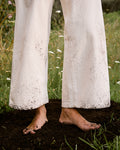
These days I have one rule on the flower farm that I revisit daily. No soil left exposed. If I can see bare soil, it needs to be covered in mulch or there should be plants covering it. Soil wants to be protected!

How quickly can soil recover when it’s cared for?
Faster than we think.
I once prepared a bed for roses eight weeks before planting — adding manure, amendments, mulch — and when I came back, everything had settled and transformed. What looked like layers and effort had integrated into something cohesive.
Over a year, the difference can be insane. Even tired soil can regenerate if you feed it and protect it. It’s incredible, actually. Put enough love into something and it responds.

Gardening requires patience. What keeps you motivated?
Gardening is dreaming. You’re always working toward something you won’t see for months. If you need instant gratification, it’s a hard path.
But there are small wins — the first bloom of something you’ve tended daily for six months, or a flower you’ve only ever seen in photos finally opening. That rush of “I brought this into existence” never really goes away.
How does living on the land shape your sense of time?
The sun moves. The moon shifts. You see it when you’re outside every day. In the city, I never noticed those changes. Here, I watch where the sun rises throughout the year. I notice the moon cycles. I feel more in touch with the seasons.
I think slow living realistically looks like going to bed early. Getting up with the sunrise and being able to sit outside and have a coffee without looking at your phone, just being able to write in your journal and not feeling like you should be somewhere.
I still work hard. But I’ve learned you can slow down without everything falling apart.

You’ve spoken about the mental health benefits of gardening. What does being in the soil give you?
There’s science around this — microbes in soil interacting with our bodies in ways that lift our mood. I can feel it. A day planting or weeding feels different to a day just harvesting.
Hands in the soil grounds me in a way nothing else does. It’s immediate and physical.

Where do you feel most connected to nature?
As much as I love the farm, when I’m in a national park, I feel a different kind of connection. I’m not trying to change anything. I’m just observing. There’s freedom in that — seeing landscapes that don’t need your intervention.
Camping in my twenties was a turning point. Sleeping outdoors shifts something in you. You realise you’re part of something much bigger.
What have flowers taught you about impermanence?
People always ask how long a flower will last. But that’s not really the point.
Flowers are here for a moment. Five days. A week. That impermanence is what makes them precious. You have to appreciate them now. Joy doesn’t last forever, and it’s not meant to.
I’ve also learned that imperfect flowers — the crooked stems, the unusual shapes — are why people buy from me. They are looking for something different, something that looks home grown.

What does “finished” mean to you?
Whether it’s a bouquet or a season, I know something is complete when it feels right — not overly perfect, not overworked. If you keep adjusting, it can lose its life.
Endings matter. Letting something finish makes space for what’s next. The land works like that too. You clear a bed. You let it rest. You begin again.

Why flowers?
Because they’re hard. And because they bring joy.
I love that growing them once felt impossible — and that through persistence, they’ve become part of my daily rhythm. There’s something deeply satisfying about working with the soil and watching it give back.
At the end of the day, it’s simple: I need to be outside. With the sun. With the seasons. With my hands in the earth.
That’s where everything makes sense.

Luen is a flower grower working with permaculture and organic principles, based in the hills above Byron Bay on Bundjalung Country. She specialises in dahlias, long-stemmed roses, and pastel-toned annuals, growing primarily for weddings and selling bouquets weekly at the Bangalow Farmers Markets alongside Foxs Lane Farm. This year she is building a new farm in Milton on the South Coast of NSW @luensflowers


